
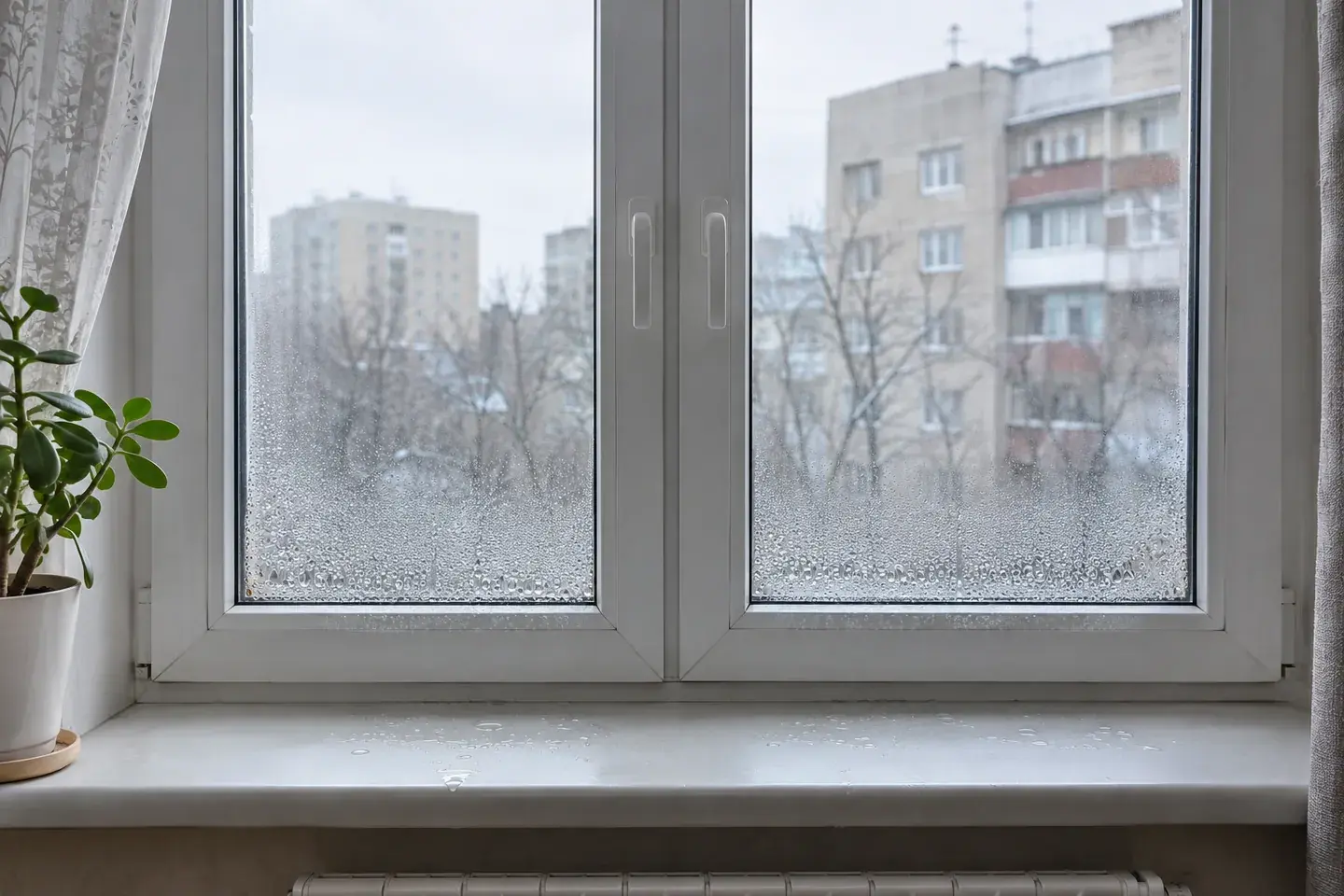
Where is the water forming?
When humid indoor air meets cold glass, water vapour can form droplets. This happens more readily in colder weather, when more moisture is released indoors, or when warm air cannot circulate freely along the glass.
- On the room-facing glass, often after cooking, showering or overnight. Check humidity, ventilation and airflow at the window.
- Between the panes of a sealed unit. Fog you cannot wipe away may indicate a failed glazing seal. Ask a window technician to check it.
- On the exterior glass in the morning. Dew that clears during the day can occur on a sound window.
- On the window reveal or wall, especially after wind-driven rain. Note when and where it gets wet and ask someone to check for water entering around the frame or through the façade.
What to observe for the next few days
Dry the sill and note when it gets wet again. If you have a hygrometer, compare readings morning and evening in the same spot, away from the window and radiator. Note when you cooked, dried laundry indoors or closed the blinds.
Use bathroom extraction and a kitchen hood that vents outdoors where available. Ventilate after activities that produce moisture and allow air to circulate near the glass. Try raising the blinds or drawing the curtain away from the radiator. Keep vents unobstructed.
Who to contact and what to send
For moisture between panes, send photos to a window technician or the installer. Ask whether the glazing unit alone can be replaced and whether it is covered by the warranty.
If several windows fog and humidity stays high, ask for a ventilation check. If one corner repeatedly gets wet or a stain grows after rain, show a repair specialist the area between the frame and the wall and describe the pattern. In an apartment block, contact building management as well if you suspect a façade or shared ventilation issue.
Frequently asked questions
Does indoor condensation mean I need a new window?
Check humidity, ventilation and airflow first. If fog is trapped between the panes of a sealed unit, have the glazing seal inspected.
Why is only one window fogging?
It may be colder than the others, a curtain may block warm air, or the area around the frame may need inspection. Note exactly where the water appears and whether it follows cold weather or rainfall.