
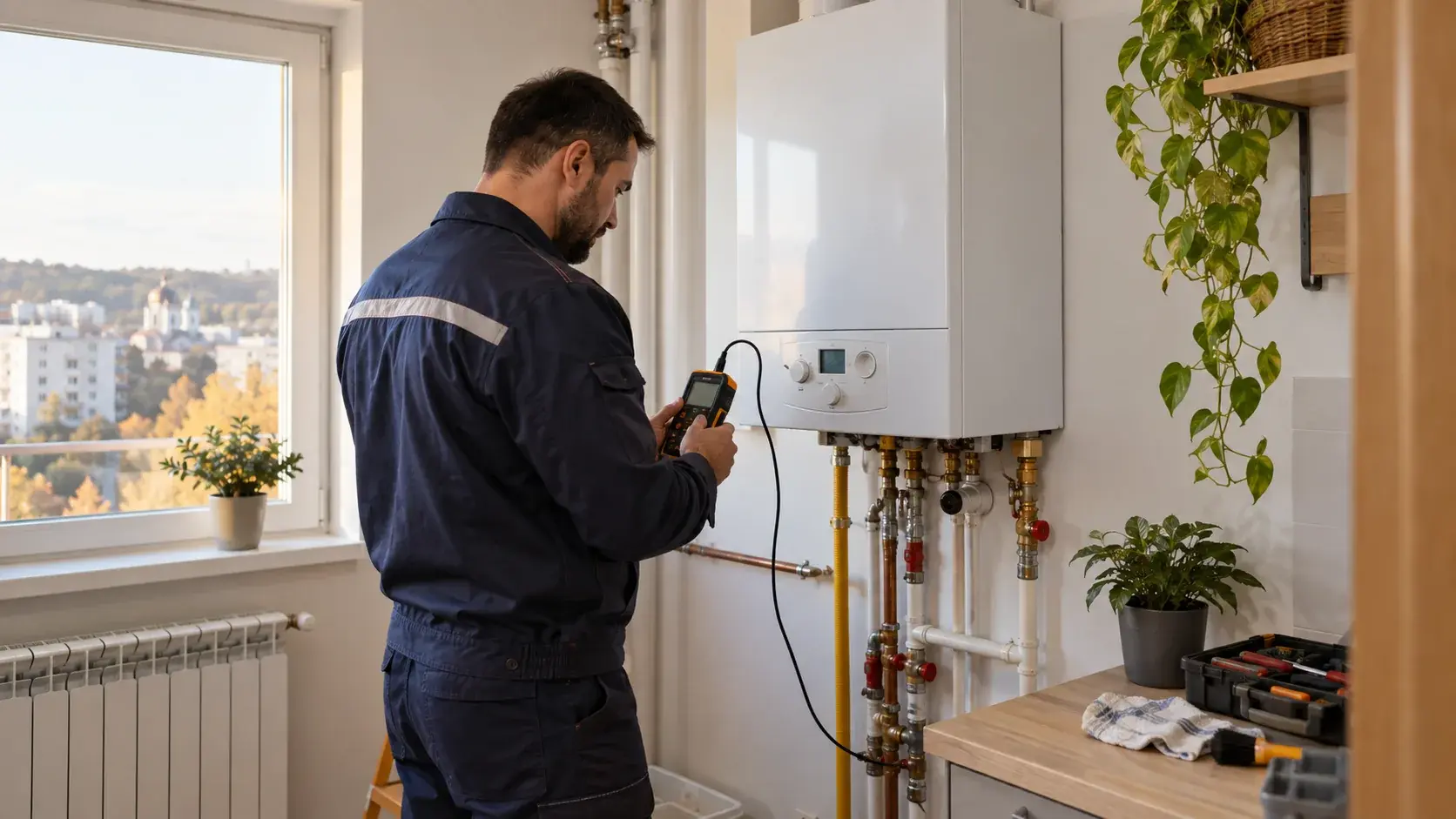
1. Stop immediately if there is danger
If you smell gas, see smoke, hear abnormal combustion, or a carbon-monoxide alarm activates, avoid flames and switches, ventilate safely, leave the area, and contact the emergency service or gas operator.
2. Safe checks without opening the boiler
Confirm that the appliance has power, the thermostat is requesting heat, the heating mode is active, and the displayed pressure is within the manufacturer’s stated range. Record any error code before resetting once, only if the manual permits it.
- Check the electrical breaker and visible plug.
- Replace thermostat batteries if required.
- Make sure external valves have not been closed accidentally.
- Never remove the boiler cover or adjust gas components.
3. Low pressure, cold radiators, or unstable hot water
Repeated pressure loss can indicate a leak or component fault. Uneven heating may involve trapped air, poor circulation, balancing, or sludge. A technician should diagnose recurring symptoms rather than repeatedly topping up the system.
4. Prepare for the technician
Send the make and model, error code, pressure reading, when the fault started, whether hot water still works, and clear photos of the display and visible pipework.
5. Agree on and verify the repair
Ask what failed, what will be replaced, the total cost, and whether the work requires an authorised gas technician. After repair, verify stable pressure, hot water, heating, and the absence of leaks or unusual sounds.
Frequently asked questions
How many times should I reset the boiler?
At most once if the manufacturer’s instructions allow it. Repeated resets can hide a persistent fault.
Can I open the boiler cover?
No. Internal electrical, combustion, and gas components should be handled by a qualified technician.
What if the pressure keeps falling?
Arrange an inspection. Repeated pressure loss can indicate a leak or an expansion-vessel or safety-valve fault.