
1. Size the unit for the room
Floor area is only a starting point. Window orientation, insulation, ceiling height, top-floor exposure, occupancy, and heat-producing appliances affect the load. An undersized unit runs continuously; a heavily oversized one may cool quickly without managing humidity well.
Explain whether you need one room or several connected spaces cooled. A single hallway unit rarely distributes air evenly throughout a home.
- Record floor area and ceiling height.
- Mention large windows and strong sun exposure.
- Identify top-floor rooms and weak insulation.
- Include kitchens and heat-producing equipment.
2. Position both units carefully
The indoor airflow should not constantly hit a bed, sofa, or desk. Leave access for air intake, filter cleaning, and service. The outdoor unit needs suitable supports, safe maintenance access, and a location permitted by the building.
Agree where pipework, cable, and drainage will run and how they will be concealed. Condensate must not drip down the façade, onto a walkway, or onto a neighbour’s balcony.
3. What the quotation should include
A comparable quotation states the included pipe length, brackets, cable, drain, drilling, trunking, working-at-height access, transport, and commissioning. Ask for the price of each additional metre and any old-unit removal.
- Confirmed unit positions and estimated route length.
- Included materials and possible extras.
- System evacuation before commissioning.
- Cooling and drainage tests plus workmanship warranty.
4. Check the completed installation
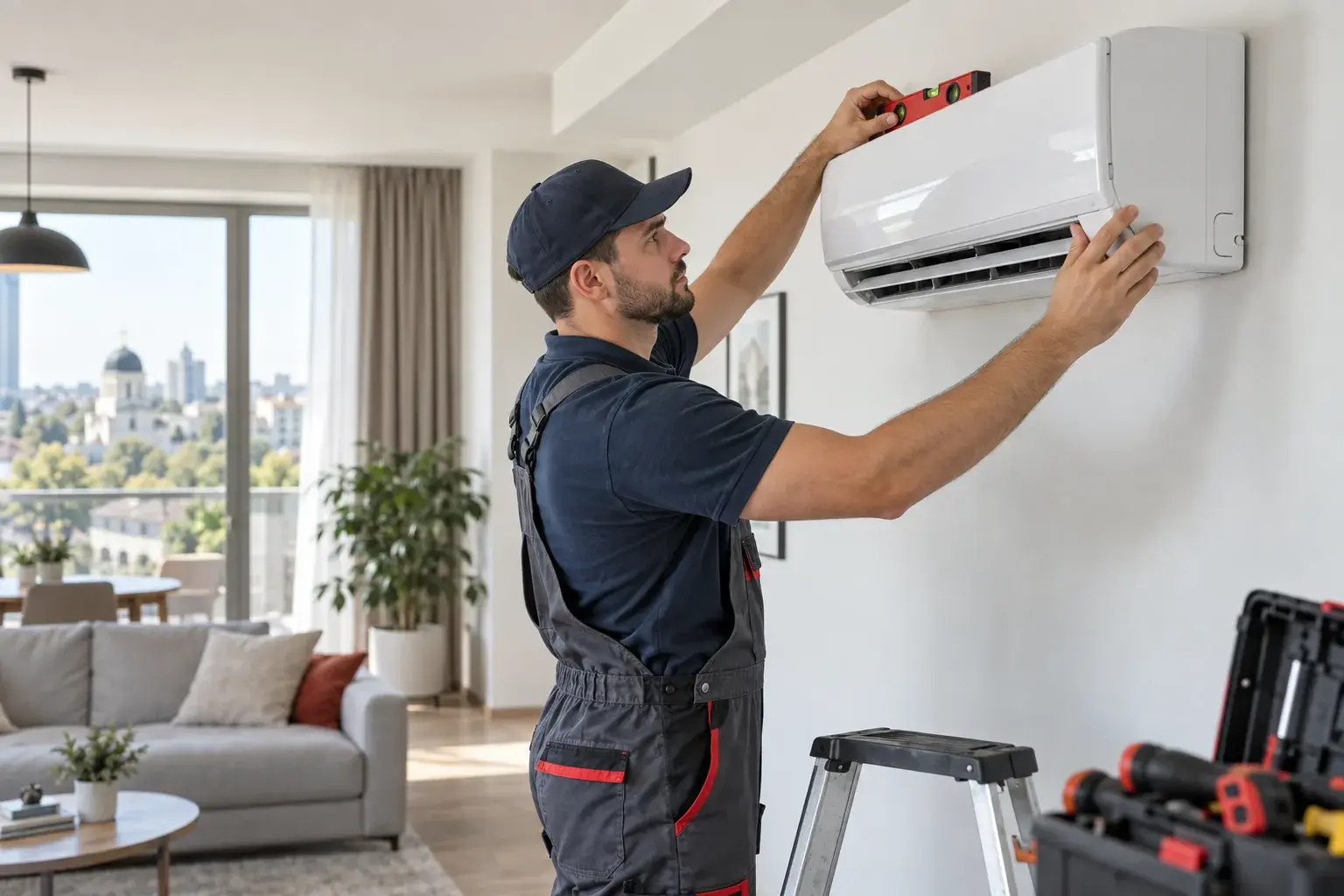
Confirm that the unit is level and free from unusual vibration or noise. Test cooling and verify that condensate drains without indoor leakage. Ask the installer to demonstrate filter access and the essential controls.
Keep the invoice, model details, warranty, and photographs of concealed pipework for future service.
5. Cleaning and maintenance
Clean user-accessible filters as instructed, while coil, blower, drainage, and refrigerant work should be assessed professionally. Persistent smells, dripping water, weak cooling, ice, or new noises need attention.
Book maintenance before peak heat. Do not accept routine refrigerant topping-up without checking for a leak.
Frequently asked questions
How long does a standard installation take?
Usually a few hours, although long routes, difficult concrete, height access, and concealed work take longer.
Does the system need to be evacuated?
Yes. Evacuation removes air and moisture from the circuit before refrigerant is released.
Can the outdoor unit go anywhere?
Check building rules, secure support, service access, drainage, and any local requirements before installation.