
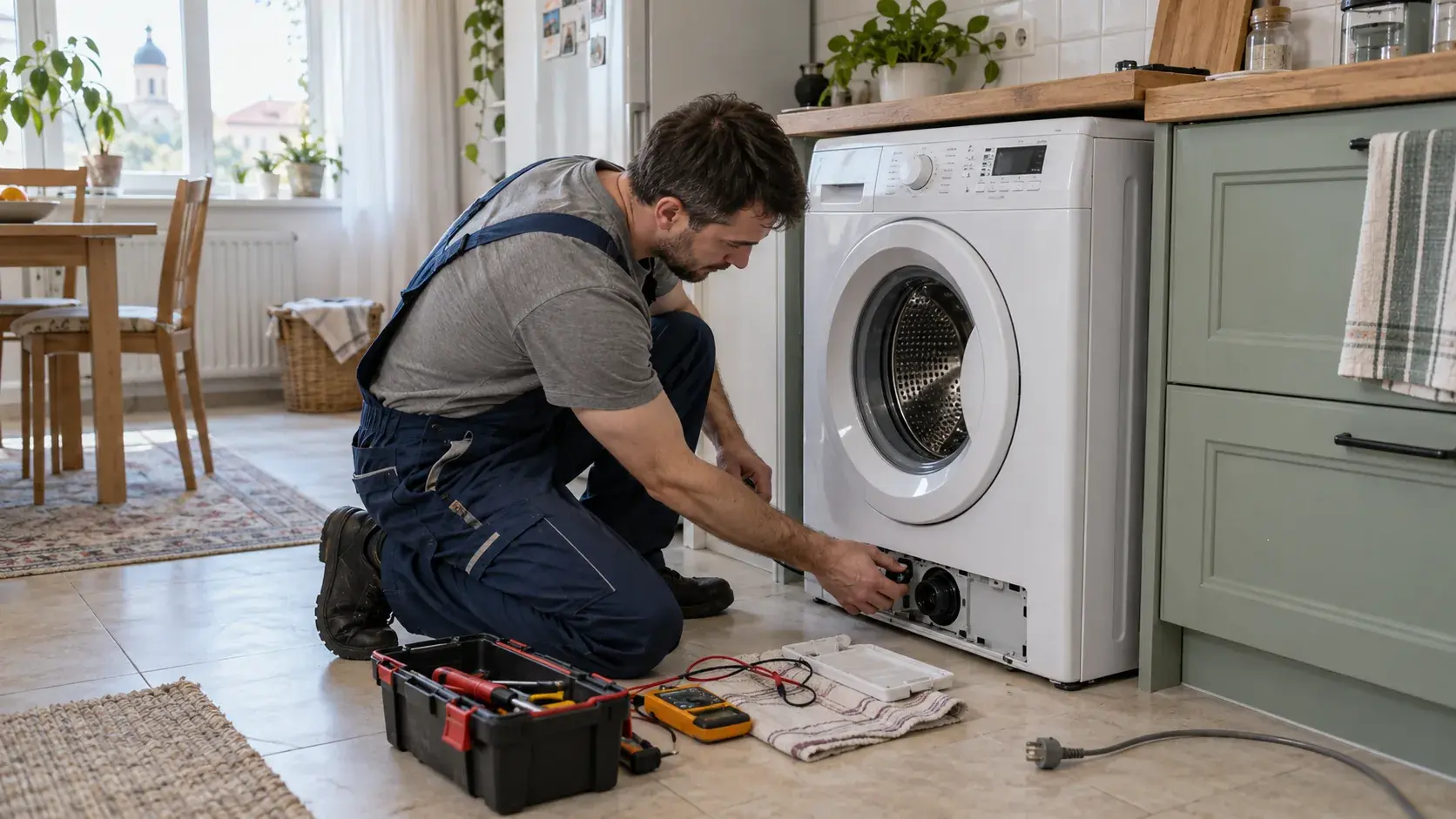
1. Stop the cycle and drain safely
Unplug the machine, close the water tap, and prepare towels and a shallow tray. Use the emergency drain hose if the manual provides one; otherwise loosen the filter slowly so water is released in controlled amounts.
2. Seven checks, from simple to technical
Work through the visible causes before assuming a component has failed.
- Confirm the selected programme includes a drain or spin stage.
- Redistribute an unbalanced load.
- Check that the drain hose is not kinked or crushed.
- Check the drain connection or sink trap for blockage.
- Clean the pump filter according to the manual.
- Look for a foreign object near the accessible impeller without forcing it.
- Record error codes and listen for whether the pump runs.
3. Clean the filter without flooding the room
Drain most of the water first, open the filter gradually, and clean lint, coins, buttons, and debris. Refit the seal carefully and run a short test while watching for leaks.
4. When to call a technician
Book a repair if the pump hums but cannot turn, the machine repeatedly shows an error, wiring smells hot, water leaks from below, or the drum remains locked after safe draining.
5. Repair or replace?
Compare the quoted repair with the machine’s age, condition, efficiency, and other recent faults. Ask for the diagnosis and total cost before authorising parts.
Frequently asked questions
Can I open the door while water is inside?
Do not force it. Disconnect power and use the documented emergency-drain procedure first.
How often should I clean the filter?
Follow the manufacturer’s instructions and check it sooner if drainage becomes slow or noisy.
Why does the problem return?
Recurring faults may involve the pump, hose installation, drain connection, wiring, or control electronics.