
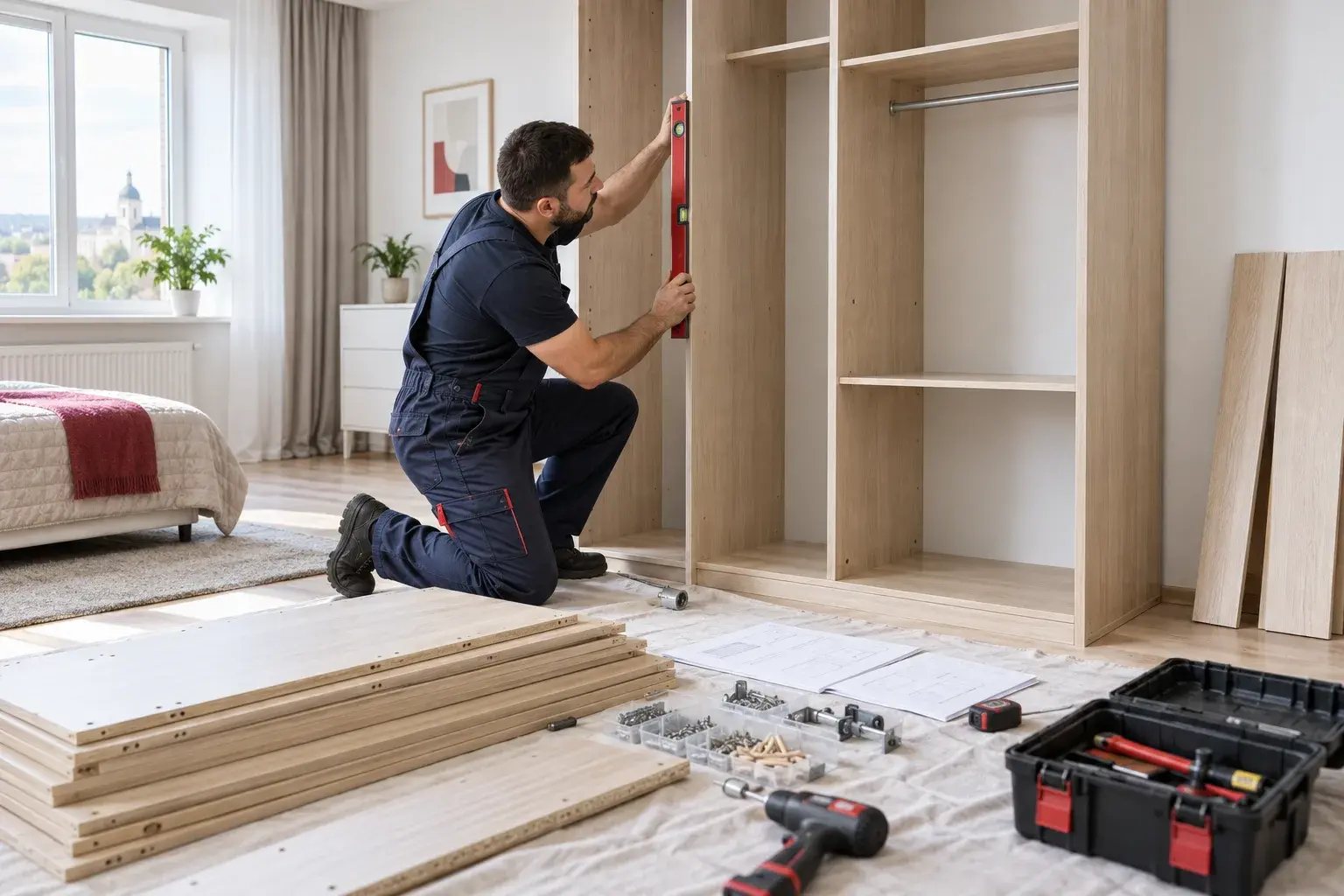
1. Check the parts, room, and access
Measure doors, corridors, and the lift as well as the final position. Confirm that walls and floors are ready and that sockets, pipes, and skirting match the plan. Count packages and photograph damaged cartons before opening.
Send the plan, dimensions, room photographs, and wall type to the assembler. Concrete, brick, and plasterboard require different fixings.
2. Agree on scope and price
State whether you need assembly only or also wall fixing, cut-outs, adjustment, mounting, sink connections, or integrated appliances. Electrical and plumbing connections require competent trades.
- Fixed price or a rate per unit, hour, or linear metre.
- Travel, consumables, cut-outs, and packaging removal.
- Number of workers and estimated duration.
- Responsibility for missing or damaged parts and workmanship warranty.
3. Prepare the room
Clear the area, protect flooring, and keep panels grouped by their labels. Provide lighting, power, and access to electrical and water isolation points. Keep packaging until all parts are checked.
Identify possible hidden cables and pipes. A detector helps, but plans and information about recent renovation remain valuable.
4. Fixing and alignment matter
Tall, wall-mounted, or tip-prone furniture must be secured according to the instructions and actual wall construction. One universal plug is not suitable everywhere. Kitchen units need alignment, supported worktops, and moisture-protected cut-outs.
Adjust doors and drawers after levelling the cabinets. Significant wall or floor deviation should be explained before parts are altered.
5. Final inspection checklist
Open every door and drawer; check gaps, stability, handles, and hardware. Confirm that furniture does not block sockets, valves, or ventilation and that cut-outs are finished.
Keep spare fittings, instructions, and the invoice. Photograph defects and distinguish product faults from installation issues before requesting correction.
Frequently asked questions
How much does furniture assembly cost?
It depends on unit count, complexity, cut-outs, fixings, and appliance integration. Send plans and photographs for a comparable quotation.
Must a wardrobe be fixed to the wall?
Follow the manufacturer’s instructions. Tall or tip-prone furniture should be anchored with fixings suitable for the wall.
Who connects the sink and appliances?
Agree this in advance. Water, gas, and electrical connections may require separate qualified professionals.