
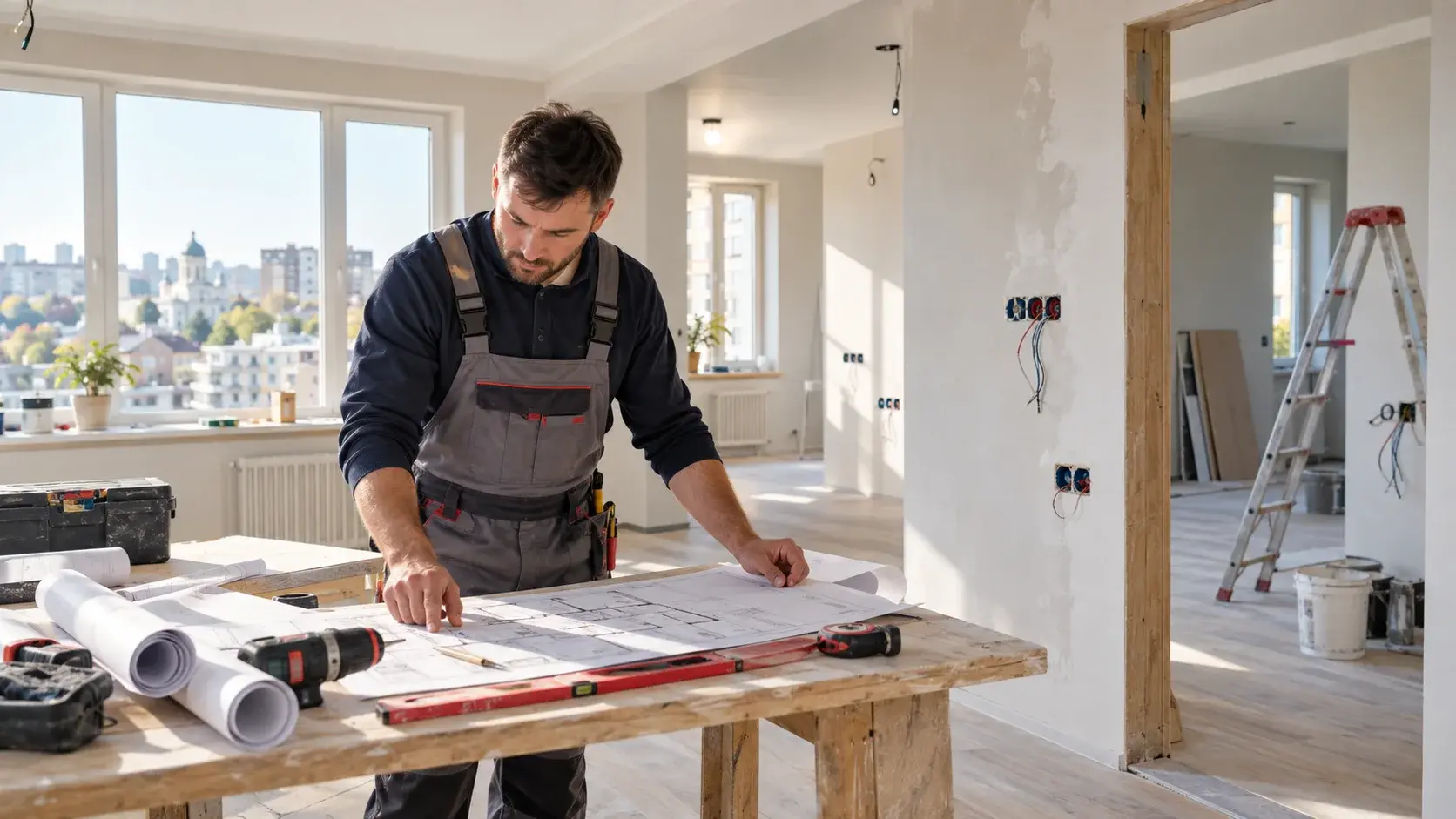
1. Define the scope before requesting quotes
List every room, the result you expect, the elements that remain, and the work that may affect plumbing, electricity, ventilation, or structure. Photos and a simple plan help professionals price the same scope.
- Separate essential work from optional improvements.
- Set a realistic budget reserve for hidden defects.
- Confirm whether building or authority approvals may be required.
2. Ask for comparable itemised quotations
Request labour, materials, quantities, exclusions, payment stages, and an estimated schedule. The lowest total is difficult to assess if the scope and materials are unclear.
3. Follow a sensible work sequence
A typical sequence is investigation and planning, demolition, hidden plumbing and electrical work, partitions and plaster, waterproofing and tiling, painting, floors, fixtures, and final testing. The exact order depends on the project.
4. Check the professional or team
Review relevant completed work, ask who will be on site, confirm responsibilities, and discuss how changes are approved. Put the scope, price, schedule, payment stages, and warranty in writing.
5. Inspect before final payment
Test sockets, lighting, taps, drainage, doors, finishes, and installed equipment. Record defects in a snag list, agree on correction dates, and retain invoices and warranties.
Frequently asked questions
How many quotes should I request?
Two or three detailed, comparable quotes usually provide enough context to assess scope, price, and approach.
Should I pay everything in advance?
Staged payments tied to clear milestones reduce risk for both parties.
Who coordinates different trades?
Agree on one responsible coordinator before work begins, whether that is you, a designer, a site manager, or the main contractor.