
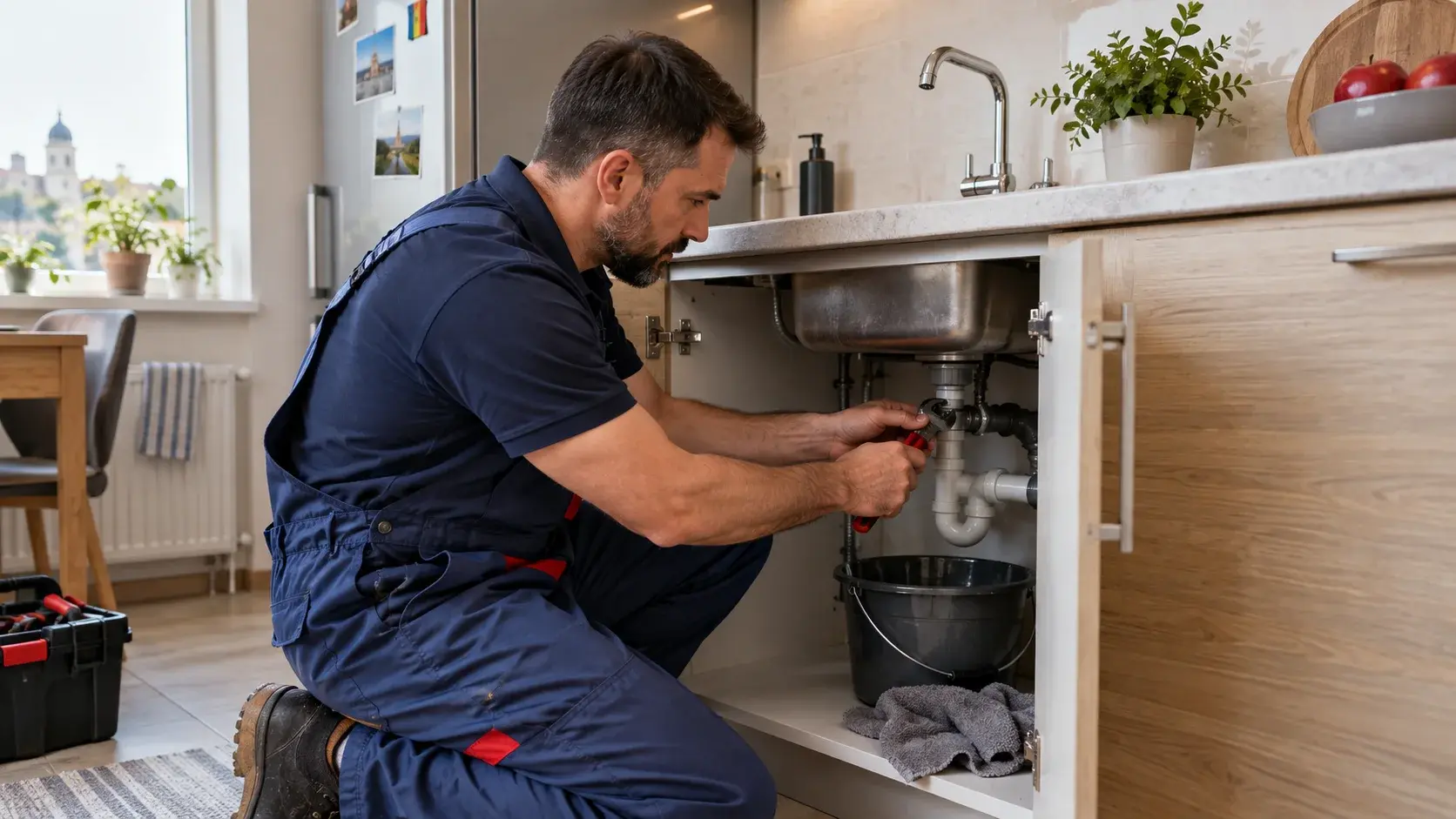
First steps in the right order
Keep people away from slipping hazards. If water is near sockets or electrical equipment, do not touch wet surfaces; isolate power only if the panel can be reached safely. Close the nearest isolation valve or the main water valve.
- Stop the water supply.
- Isolate electrical risk.
- Collect water and move valuables.
- Photograph the damage.
- Call a plumber and, where relevant, the building manager or insurer.
Finding the correct valve
Fixture valves are often under sinks or beside toilets; the main valve may be near the meter or service entry. Turn gently. Do not force a seized valve, because it can break and worsen the leak.
What the plumber needs to know
Share the address, floor, source and rate of the leak, pipe material if known, whether water is isolated, access constraints, and clear photos. Mention leaks affecting neighbours or common building systems.
Temporary or permanent repair?
A clamp or patch may limit damage temporarily, but the professional should explain the failed section, the permanent repair, and whether adjacent pipework is also deteriorated.
Drying and prevention
Ventilate and dry the area promptly, but avoid energising wet electrical equipment. Monitor concealed areas for moisture and mould, and label accessible shut-off valves for future emergencies.
Frequently asked questions
What if I cannot find the main valve?
Contact the building manager, water operator, or an emergency plumber and keep people away from electrical hazards.
Can I use a temporary clamp?
Only if it can be fitted safely and without delaying isolation. Treat it as temporary until a plumber assesses the pipe.
Should I turn the electricity off?
If water is near wiring, sockets, or appliances, avoid the area. Isolate power only from a dry, safely accessible panel; otherwise call emergency help.